Gabriel Travel
Gabriel Travel
Gabriel Travel
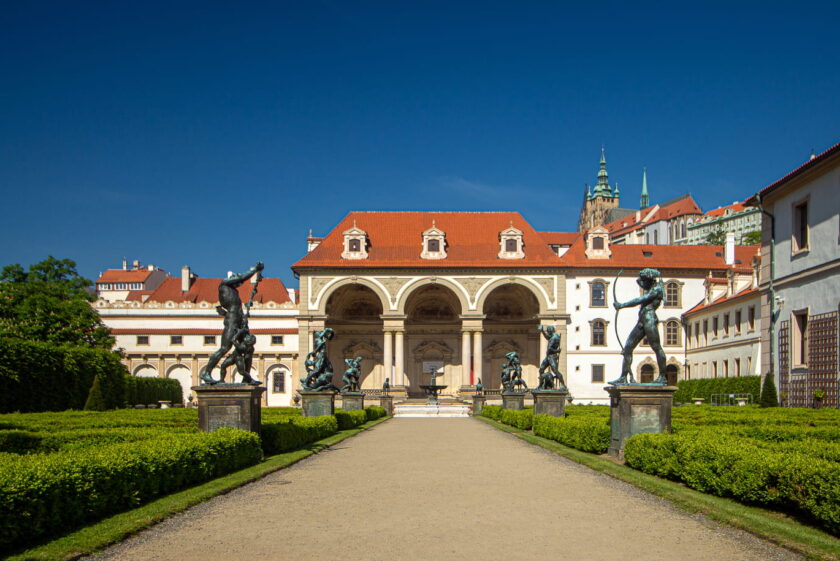
Tucked behind the walls of Wallenstein Palace in Malá Strana — just five minutes walk from Charles Bridge — lies one of Prague’s most beautiful and least crowded attractions. The Wallenstein Garden is a magnificent 17th century Baroque garden, completely free to enter, hidden from the street behind heavy wooden gates that most visitors walk past without realising what lies beyond.
As local Prague tour guides, this is one of our favourite recommendations for visitors who want to discover the real Prague beyond the crowds of Old Town Square. Here is everything you need to know before you visit.
This 17th-century garden, one of the finest examples of early Czech Baroque, was designed in the style of an Italian Mannerist park between 1623 and 1629.
The largest part of the garden is dominated by the Sala Terrena, in front of which is a fountain with a sculpture of Venus and Cupid. This part of the Wallenstein Garden also features an artificial wall of stalactites, which is linked to an aviary for birds. If you look closely at the stalactite wall, you can see the hidden silhouettes of animals such as frogs and snakes, or the faces of animals and monsters.
In the second, smaller part of the Wallenstein Garden, there is a large pool with an artificial island. That is decorated with a sculpture of Hercules fighting Hydra, club in hand, preparing to smite the dragon at his feet.
Address:
Letenská 123/4, Prague 1 — Malá Strana, directly behind Wallenstein Palace.
The main entrance is on Letenská Street — look for the large wooden gates.
Opening hours:
April — October: Monday to Friday 7:30-18:00, Saturday and Sunday 10:00-18:00
November — March: The garden is closed during winter months.
Entry:
Free of charge — one of Prague’s best free attractions.
Getting there:
Tram 12, 20, 22 or 23 to Malostranské náměstí — 3 minute walk.
Metro line A to Malostranská — 5 minute walk.
How long to allow:
45-60 minutes for a comfortable visit including the Sala Terrena and all garden sections.
Combine with the nearby Vojan Gardens or a walk up to Prague Castle for a full Malá Strana afternoon.

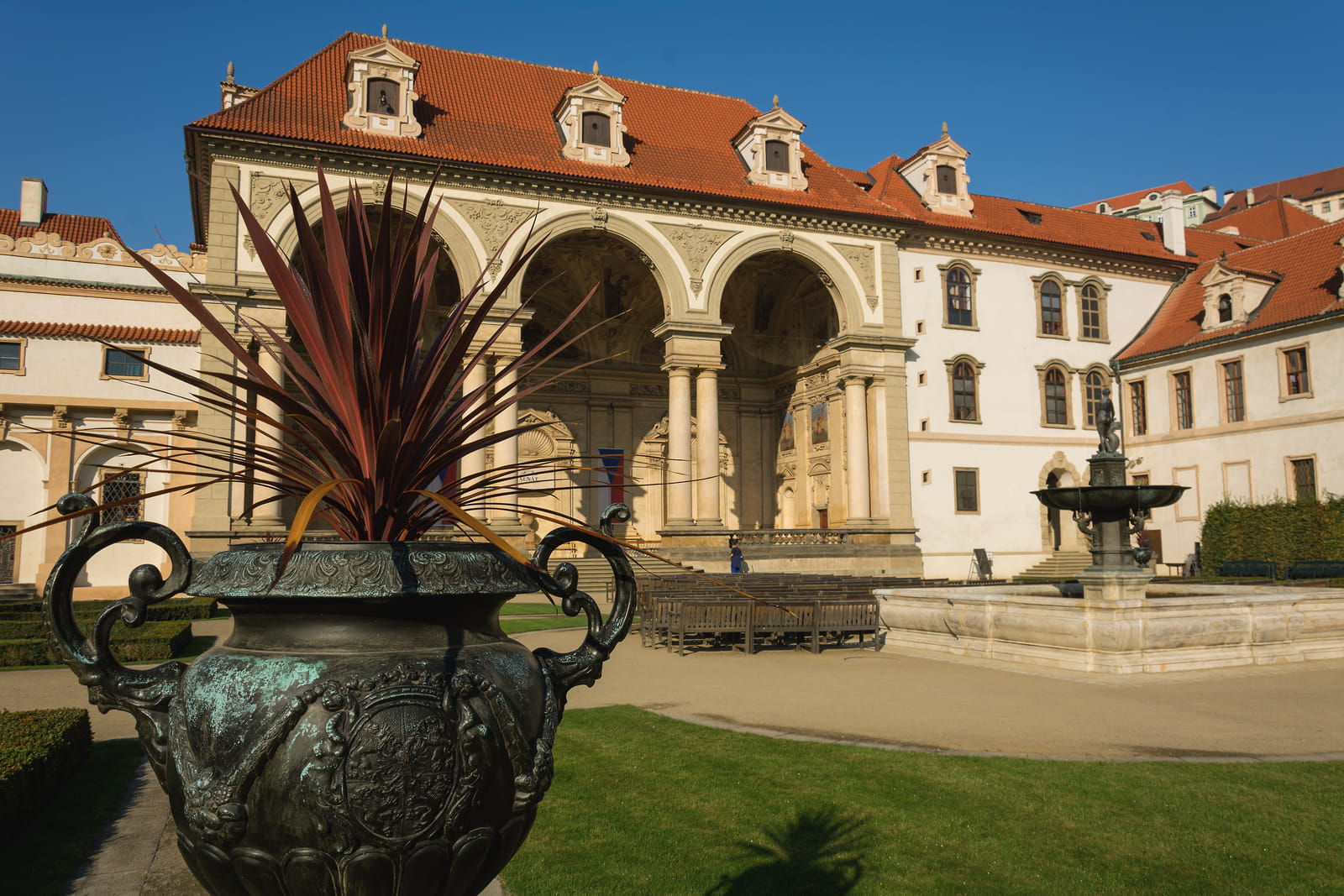
A sala terrena is a large room or hall open on one side with direct access to a garden. The sala terrana of the Wallenstein palace has three monumental arches and is a faithful copy of the portico of the cathedral in Livorno in Italy. The vaults of the Wallenstein Sala Terrana are decorated with rich stucco and frescoes depicting gods from ancient Greece. The images are surrounded by stucco depicting the Trojan War story.
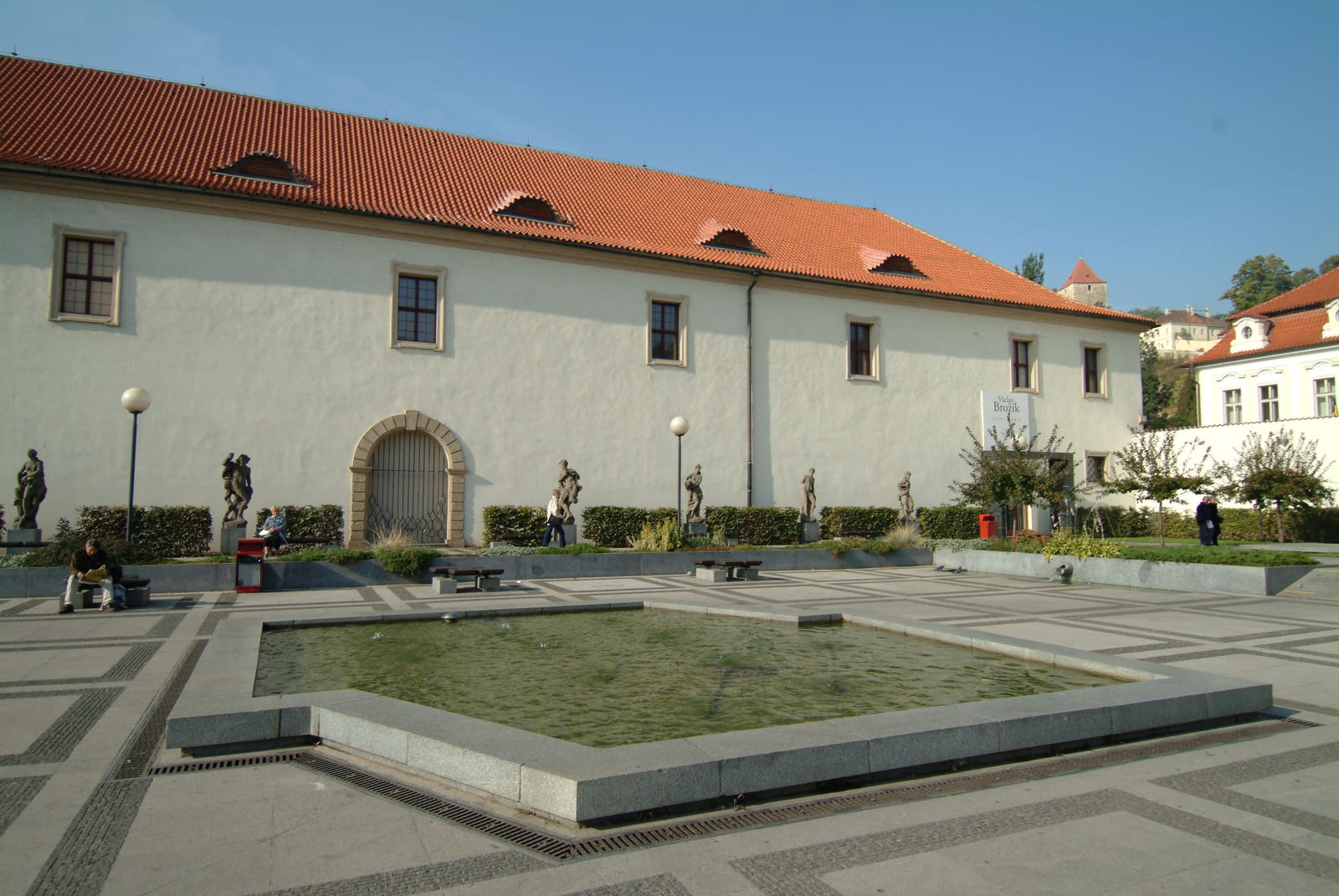
The Wallenstein riding school was built as a part of Wallenstein Palace. The National Gallery of Prague organizes temporary exhibitions in the riding school (Valdštejnská jízdárna). In 1845, the Wallenstein Riding School was the venue for the ball in honour of the engagement of the Imperial couple Franz Josef I and Elizabeth, better known as Empress Sissi.
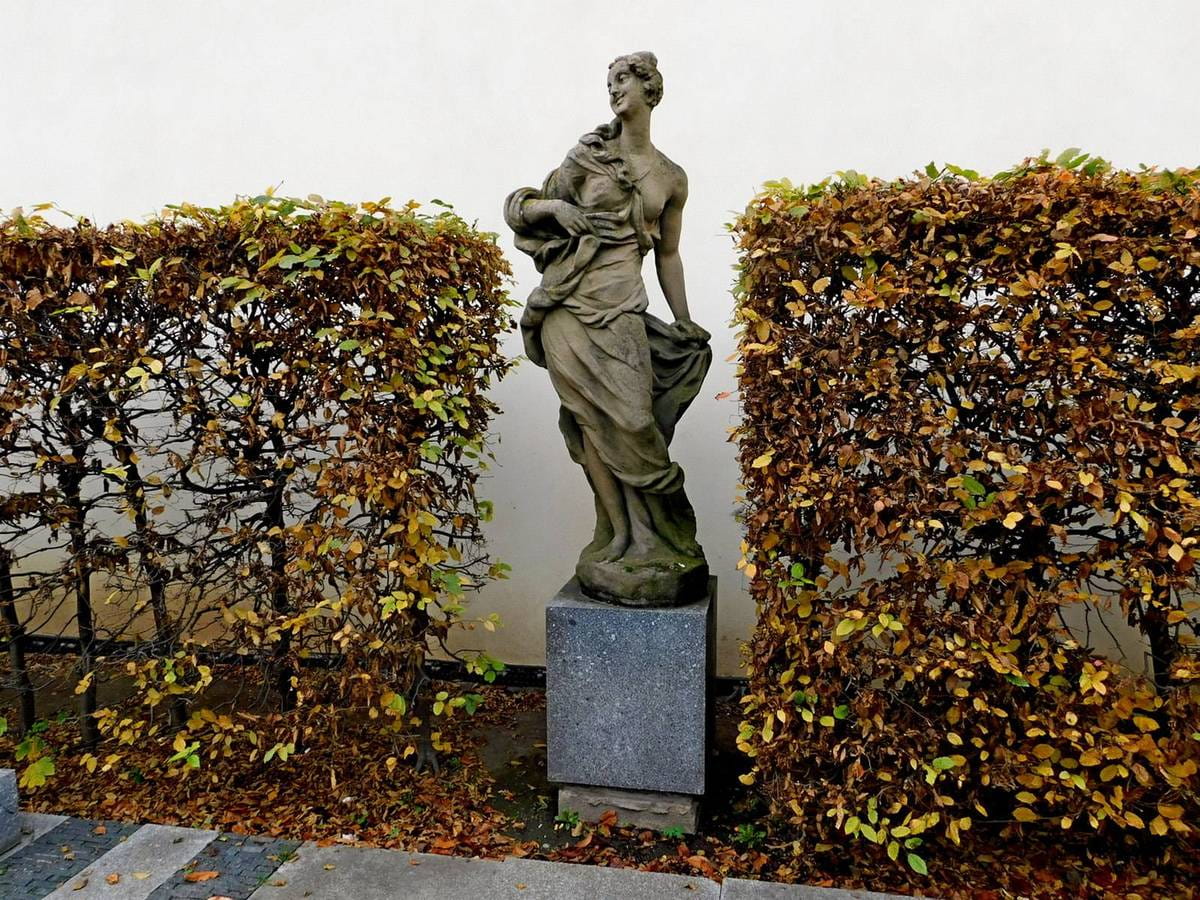
One of Wallenstein Garden’s most fascinating stories is the fate of its original statues. During the Thirty Years’ War the Swedish army sacked Prague in 1648 — taking Albrecht von Wallenstein’s magnificent bronze statues as war trophies along with countless other treasures.
The statues — masterworks by Dutch sculptor Adriaen de Vries, depicting mythological scenes from classical antiquity — were transported to Sweden where they remain to this day. They are now displayed at Drottningholm Castle outside Stockholm, the private residence of the Swedish royal family. The statues you see in the garden today are high quality replicas created in the 20th century.
This is one of the great unresolved cultural restitution stories of European history — the Czech Republic has never formally recovered them despite their significance to Czech heritage.

The Wallenstein Garden is one of Prague’s most photogenic locations — and because it is less visited than Charles Bridge or Old Town Square, you can often photograph it without crowds.
Best photography spots:
The Sala Terrena arches — the three monumental arches with the formal garden stretching in front create a classic symmetrical composition that works beautifully in morning light when shadows fall across the stonework.
The stalactite wall — the artificial grotto wall with its hidden animal faces is extraordinary in close-up detail photography. Worth spending time with a macro lens or smartphone close-up mode to reveal the hidden figures.
The Hercules pond reflection — the large pond with its Hercules statue reflects the surrounding trees and the palace facade on still mornings before the breeze picks up.
The garden in spring — when the formal hedges are freshly trimmed and the peacocks that roam freely are most active, Wallenstein Garden produces extraordinary images.
Our Prague photography tours can include Wallenstein Garden as part of a Malá Strana photography walk — combining the garden with Charles Bridge, Kampa Island and Lesser Town’s hidden courtyards at magic hour.
Wallenstein Garden is surprisingly good for families — here is why.
The resident peacocks roaming freely through the garden are an immediate hit with children of all ages. The stalactite wall with its hidden animal faces — frogs, snakes, monsters — becomes a discovery game that keeps younger children engaged.
The open formal lawns provide space to relax between sightseeing. Being completely free makes it ideal for families managing costs across a multi-day Prague visit.
The adjacent Wallenstein Riding School gallery hosts changing exhibitions that appeal to older children and teenagers with an interest in art.
For families, we recommend combining Wallenstein Garden with a walk through Malá Strana’s quiet backstreets and up to Prague Castle for a private morning tour of Prague’s most beautiful neighborhood.
Wallenstein Garden sits in the heart of Malá Strana — Prague’s most beautiful and most atmospheric neighbourhood.
Nearby attractions worth combining:
Prague Castle — 15 minute walk uphill through Malá Strana’s Baroque streets. The contrast between the formal garden’s symmetry and the castle’s organic medieval complexity is striking.
Charles Bridge — 5 minute walk east toward the river. The bridge towers are visible from Malostranské náměstí square immediately outside the garden gates.
Vojan Gardens — Prague’s oldest garden, tucked behind Josefská Street a few minutes walk away. Even quieter than Wallenstein Garden and almost unknown to tourists.
Czech Museum of Music — 3 minute walk on Karmelitská Street. If you enjoyed reading about Wallenstein’s Italian Mannerist influences, the Baroque church housing the music museum is a natural companion visit.
Wallenstein Garden is one of the highlights on our private Malá Strana walking tour — combined with Charles Bridge, Prague Castle and the hidden gems of Lesser Town.
Want to explore Malá Strana with a local expert who knows its Baroque history, stolen statues and secret gardens intimately?